A persistent tick from a 5.7L HEMI engine is commonly diagnosed as a failing MDS (Multi-Displacement System) lifter wearing down the camshaft lobe beneath it. Left alone, a stuck or collapsed lifter can destroy a camshaft lobe and scatter metal debris through the oiling system. Caught early, the fix is a cam and lifter replacement, with an MDS delete as an option to prevent a repeat.
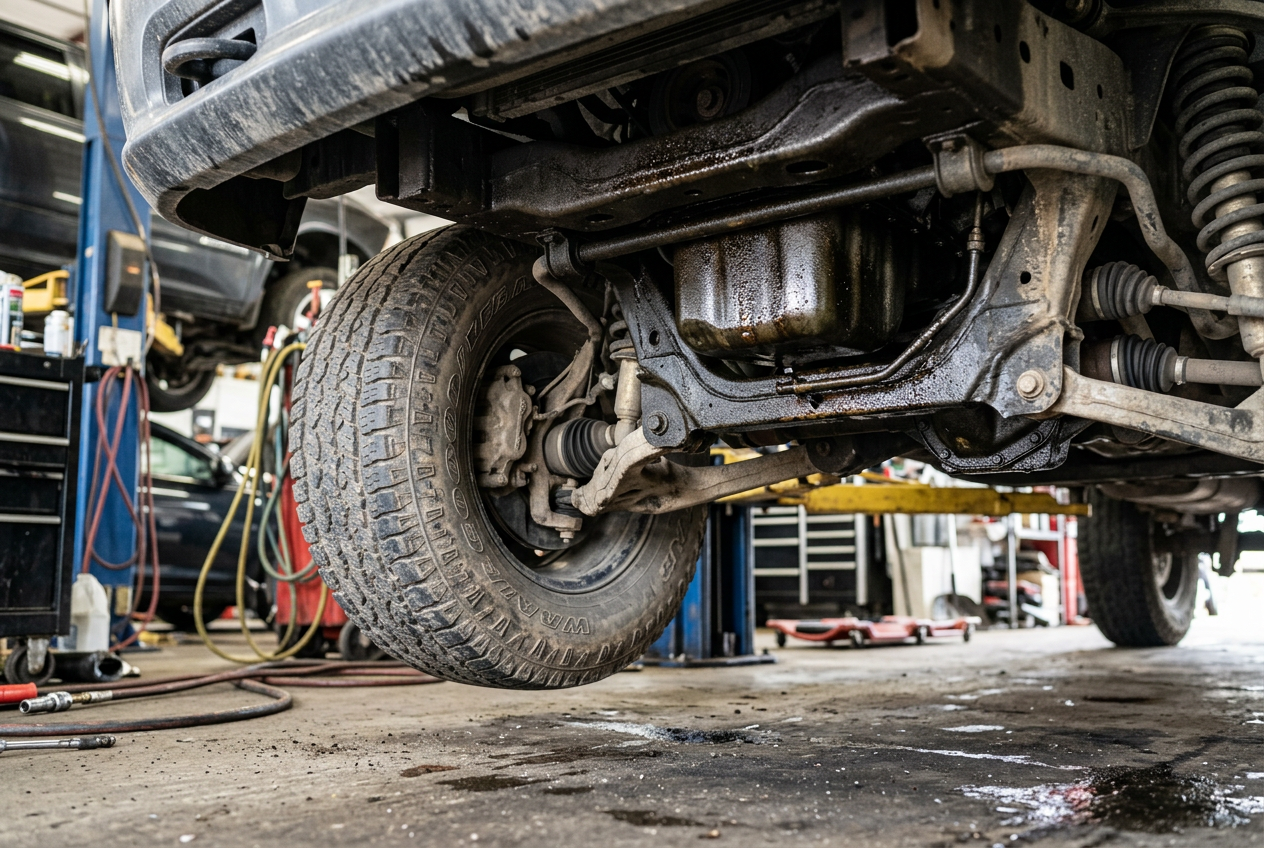
Rendered image of a 2009-2021 Chrysler Ram 1500 with oil spots underneath. Not a customer vehicle.
Which vehicles and years are affected?
This issue is commonly reported on roughly 2009-2021 vehicles equipped with the 5.7L HEMI engine. That covers a wide range of Chrysler, Dodge, Jeep, and Ram products sold in the United States:
Ram 1500 (2009-2021)
Ram 2500 (select years with 5.7L HEMI)
Dodge Charger (2009-2021)
Dodge Challenger (2009-2021)
Chrysler 300 (2009-2021)
Dodge Durango (2011-2021)
Jeep Grand Cherokee (2011-2021)
If your vehicle is on this list and you hear a tick, read on before you decide to ignore it.
What does the HEMI tick actually sound like?
The classic HEMI tick is a rapid, metallic tapping that comes from the top of the engine. It sounds a lot like a sewing machine running at idle. A cold-start tick that fades within 60-90 seconds as oil pressure builds is a normal hydraulic lifter characteristic and is generally nothing to worry about. The tick that matters is one that stays warm, gets louder when you accelerate, or shows up alongside a rough idle or a check engine light with a P0300 random misfire code.
What is MDS and why does it cause this failure?
MDS stands for Multi-Displacement System. At light throttle, the engine’s PCM commands four of the eight cylinders to deactivate. Special two-stage lifters collapse on command so those valves stop opening. When the solenoids or lifters wear or stick, a lifter can fail to return to its full-travel position. It then stops following the camshaft lobe correctly, and the lobe wears flat over thousands of miles. Once a lobe is worn flat, that cylinder misfires every time the engine fires on it.
The root cause is commonly diagnosed as a combination of oil viscosity issues, extended oil change intervals, and the mechanical stress the MDS switching puts on those specific lifters over time.
Symptom stages: early, middle, and late
Stage
What you notice
Likely cause
Urgency
Early
Faint tick at warm idle, no codes
MDS lifter beginning to stick
Schedule a diagnostic soon
Middle
Tick stays warm, rough idle, P0300 misfire code
Lifter collapsed, cam lobe starting to wear
Do not delay, diagnose this week
Late
Loud knock, severe misfire, metal in oil, oil pressure drop
Cam lobe worn flat, debris in oiling system
Stop driving, tow to shop
Is it safe to keep driving with a HEMI tick?
A cold-start tick that clears in under two minutes is generally safe to monitor. Any tick that is present at normal operating temperature, especially one paired with a P0300 misfire code, a rough idle, or a loss of power, is not safe to ignore. Metal debris from a worn cam lobe circulates through the entire oiling system. It can score bearings and cylinder walls, turning a cam-and-lifter job into a full engine replacement. If the check engine light is flashing rather than steady, pull over and have the vehicle towed. A flashing CEL means an active misfire severe enough to damage the catalytic converter.
What does the repair involve?
The standard repair for a confirmed MDS lifter and camshaft failure on the 5.7L HEMI is a camshaft and lifter replacement. The intake manifold and valve covers come off, the timing chain is removed, and the cam and all sixteen lifters are replaced as a set. Replacing only the failed lifter is not recommended because the others have the same wear history.
At the same time, the oil pan is dropped to inspect the pickup screen and pan floor for metal debris. If debris is present, a thorough flush is part of the job. The oil and filter are replaced as part of the repair regardless.
What does this repair cost?
The cost of a cam and lifter replacement on the 5.7L HEMI varies based on several factors. No exact price can be given without inspecting the vehicle, but here is what moves the number:
Extent of cam lobe damage: A lightly worn lobe caught early costs less than one that has shed debris into the oiling system.
MDS delete vs. OEM replacement: The solid lifter delete kit costs more in parts but may save money long-term by preventing a repeat failure.
Oil pan and pickup screen condition: If metal debris is found, additional cleaning and inspection time is required.
Labor rate and location: This is a significant labor job. The engine does not come out, but the top end is fully disassembled.
Parts sourcing: OEM Mopar cam and lifter kits versus aftermarket options carry different price points and warranty terms.
A diagnostic scan and valvetrain inspection is the right first step. That gives you a clear picture of what is actually worn before any parts are ordered.
How does oil maintenance connect to this failure?
The 5.7L HEMI with MDS is sensitive to oil quality and change intervals. The MDS lifters rely on clean, properly pressurized oil to cycle correctly. Chicago winters bring a wet, wind-driven cold off Lake Michigan that is harder on engines than the thermometer alone suggests. That kind of cold thickens oil and slows pressure buildup on startup, which is exactly when the MDS lifters are most vulnerable. Running extended oil change intervals in that environment accelerates wear on the MDS components. Staying on a consistent schedule with the correct viscosity for your model year is the single best preventive step you can take.
Two members of the Norwood Auto Service team outside with a dark SUV.
Should I check for an open recall on my vehicle?
The recall status of the 5.7L HEMI MDS lifter issue is currently unconfirmed for the model years covered here. Before spending money on any repair, run your VIN through the NHTSA recall lookup to check for any open recall that applies to your specific vehicle. You can also check Mopar’s owner resources for any active service programs tied to your VIN. If a recall applies, a franchised dealer performs that work, not an independent shop.
How does Norwood Auto Service diagnose this?
The diagnostic process starts with a scan for stored and pending codes, including P0300 and any cam or VVT-related codes. From there, a running inspection listens for tick location and character at idle and under load. If the tick and codes point to the valvetrain, the valve covers come off for a visual inspection of the cam lobes and lifter bores. Oil condition is checked at the same time for metallic contamination. Erik Scheidt, owner and leader of the ASE Certified team at Norwood Auto Service, will walk you through exactly what the inspection finds before any repair is authorized. For a closer look at how engine diagnostics work, that page covers the process in detail.
Norwood Auto Service is a NAPA AutoCare Center serving Norwood Park, Edison Park, Forest Glen, and the surrounding North Side neighborhoods. Drivers coming in from the Kennedy or heading up Northwest Highway will find us at 6055 N Northwest Hwy. If you drive a Ram 1500 or Grand Cherokee and have noticed suspension or steering issues alongside the engine concerns, our post on common suspension problems covers related topics worth reading. And if you are wondering whether your last oil change interval may have contributed to this, what a thorough oil service often uncovers is worth a few minutes. We also serve drivers throughout the North Park and Albany Park areas.
Frequently Asked Questions
Is the HEMI tick always a sign of serious engine damage?
Not always. A faint tick at cold start that goes away within a minute or two is commonly a normal hydraulic lifter bleed-down. A tick that stays warm, gets louder under load, or comes with a misfire or check engine light points to MDS lifter or camshaft trouble that needs diagnosis right away.
Can I keep driving with a HEMI tick?
If the tick is new, persistent, or paired with a rough idle, misfires, or a P0300 code, stop driving until it is diagnosed. Continued driving with a failing lifter can destroy the camshaft lobe and send metal debris through the entire oiling system, turning a manageable repair into a much larger one.
What is MDS and why does it cause this problem?
MDS stands for Multi-Displacement System. It deactivates four of the eight cylinders at light throttle to save fuel. The solenoids and lifters that handle that switching are commonly diagnosed as the failure point on roughly 2009-2021 5.7L HEMI engines. When a lifter sticks or collapses, it stops following the camshaft lobe and the lobe wears flat.
What is an MDS delete and should I do it?
An MDS delete replaces the deactivating lifters with solid lifters and reprograms the PCM to stop attempting cylinder deactivation. It eliminates the failure mode entirely. Whether it makes sense for your vehicle depends on mileage, condition, and how you use the truck or SUV. A technician can walk you through the trade-offs.
Which vehicles are affected by this issue?
The 5.7L HEMI MDS lifter and camshaft issue is commonly reported on roughly 2009-2021 Ram 1500, Ram 2500, Charger, Challenger, 300, Durango, and Grand Cherokee models equipped with the 5.7L HEMI engine.
Hear a tick in your HEMI? Book a diagnostic at Norwood Auto Service in Chicago’s Norwood Park neighborhood. Erik Scheidt and the ASE Certified team will inspect the valvetrain, pull any stored codes, and give you a straight answer on what it needs. Repairs come with a 3-year/36,000-mile nationwide warranty. Financing is available, and if you need to get moving while the truck stays with us, we offer complimentary Uber rides within three miles.
Erik Scheidt is the owner of Norwood Auto Service and represents the second generation of family leadership at the shop. He began working at Norwood Auto Service at age 16 and now brings more than 18 years of hands-on experience in every aspect of the automotive business, from customer service to shop management.
Today, Erik leads a team of ASE certified technicians dedicated to providing high quality repair and maintenance for both domestic and foreign vehicles. He has helped modernize the shop by introducing Digital Vehicle Inspections, giving customers photos, detailed explanations, and the information they need to make confident decisions about their vehicles.
 Call Us: (773) 774-7333
 Address: 6055 N Northwest Hwy, Chicago, IL 60631, USA
 Open Hours: Mon-Thu 8AM-5PM (Wed opens 9AM) Fri 8AM-4PM