-
 Call Us: (773) 774-7333
 -
 Address: 6055 N Northwest Hwy, Chicago, IL 60631, USA
-
 Open Hours: Mon-Thu 8AM-5PM (Wed opens 9AM) Fri 8AM-4PM
Call Us: (773) 774-7333 Address: 6055 N Northwest Hwy, Chicago, IL 60631, USA Open Hours: Mon-Thu 8AM-5PM (Wed opens 9AM) Fri 8AM-4PM White exhaust smoke, a mysteriously low coolant reservoir, and a rough-running engine on a Ford Escape, Edge, or Fusion with the 2.0L EcoBoost engine commonly point to one problem: coolant getting into the combustion chamber. The most frequent cause diagnosed on these engines is a cracked or warped cylinder head, or a failed head gasket, that allows coolant to cross from the cooling passages into the cylinder. Left alone, this issue can destroy an engine in a matter of miles.
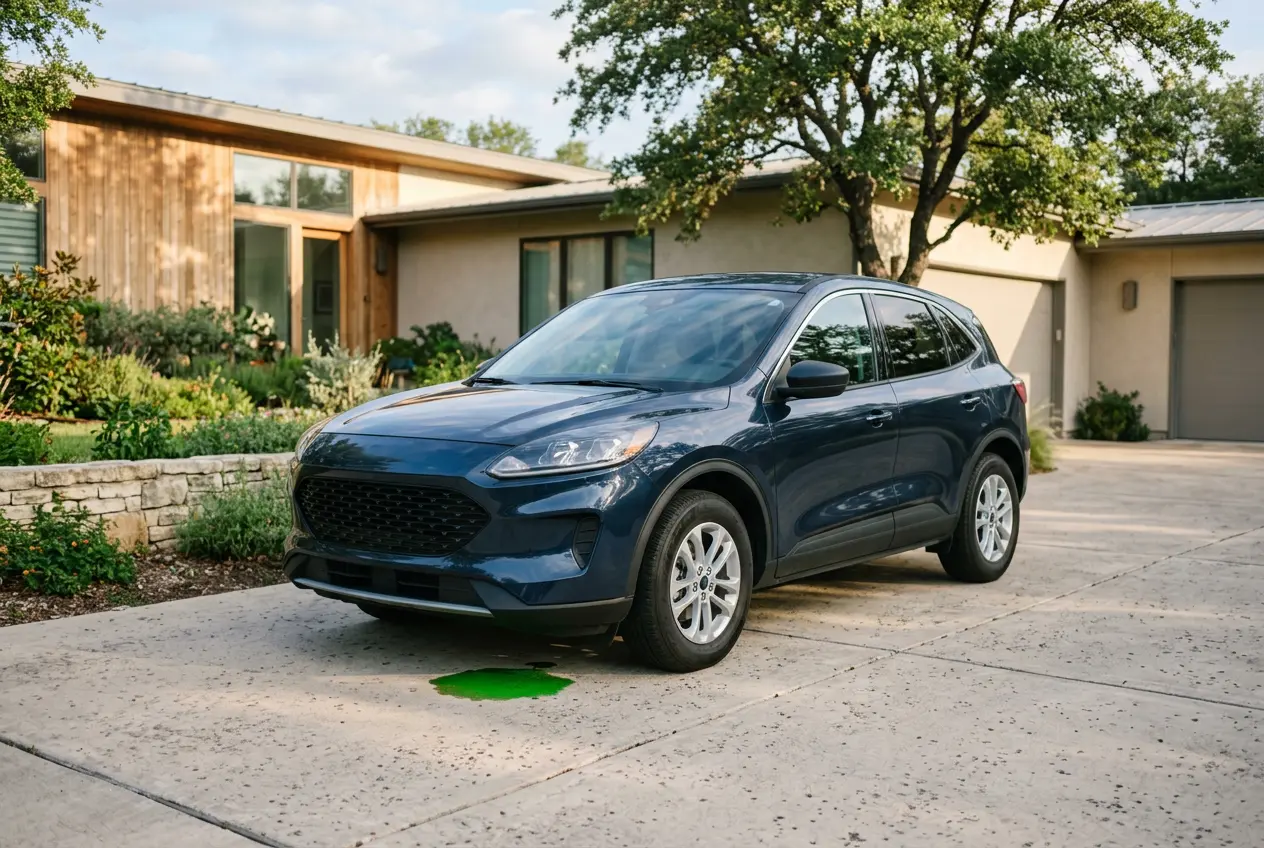
This coolant intrusion problem is commonly reported on roughly 2013-2019 Ford Escape, Ford Edge, and Ford Fusion models equipped with the 2.0L EcoBoost four-cylinder engine. If you drive one of these vehicles and notice any of the symptoms below, treat it seriously. The 2.0L EcoBoost is a turbocharged, direct-injection engine used across several Ford platforms, and the cooling system design on these years is a known area of concern.
The signs tend to build over time, but any one of them is reason enough to stop driving and get a diagnosis.
The combustion chamber and the cooling passages run side by side inside the engine, separated by the cylinder head gasket and the cylinder head itself. On the 2.0L EcoBoost, the commonly diagnosed root cause is a cracked cylinder head or a head gasket failure that opens a path between those passages. Turbocharging adds heat and pressure that a naturally aspirated engine never sees, and repeated heat cycles over time can stress the head material or the gasket sealing surface. Once that seal breaks, coolant migrates into the cylinder on the intake stroke and burns with the fuel.
| Stage | What you notice | What is happening inside | Urgency |
|---|---|---|---|
| Early | Coolant level drops slowly, faint white smoke at startup | Small breach in head gasket or hairline crack; coolant seeping in small amounts | Schedule diagnosis soon |
| Mid | Persistent white smoke, misfires, rough idle, coolant warning light | Larger breach; coolant fouling spark plugs and catalytic converter | Stop driving, get it towed |
| Late | Engine overheating, milky oil, loss of power, engine may not restart | Coolant in oil destroys bearing surfaces; hydrolock risk if cylinder fills with liquid | Do not start the engine |
No. Thick white exhaust smoke with a sweet smell is a safety stop. Coolant in the combustion chamber can hydrolock the engine, meaning the cylinder fills with liquid that cannot compress, and the connecting rod bends or breaks when the piston tries to fire. That is a catastrophic engine failure. If the temperature gauge is climbing or the coolant light is on, pull over, shut the engine off, and arrange a tow. Do not add coolant and keep driving hoping it will hold.
The diagnostic process starts with a cooling system pressure test to confirm the system is losing pressure, and a combustion leak test (using a chemical block tester) to confirm combustion gases are entering the coolant. Once confirmed, the cylinder head must come off. The repair path depends on what the inspection finds:
There is no single number for this repair without seeing the vehicle, because the cost depends on what the head inspection reveals. Here is what drives the range:
The honest answer is that a proper diagnosis comes first. A cooling system pressure test and block test will tell you exactly what you are dealing with before any estimate is written. No shop can give you an accurate number without that step.
Chicago winters do not help. The wet, wind-driven cold off Lake Michigan and the heavy road salt the city uses all winter accelerate corrosion on coolant hoses, clamps, and the aluminum surfaces of the cylinder head. On a vehicle that already has a cooling system weakness, that environment speeds up the timeline. If your Escape or Fusion has been losing coolant slowly and you have been topping it off through the winter, now is the time to get it checked before the problem reaches the late stage.

Always check. The NHTSA VIN lookup tool will tell you in seconds whether an open recall exists for your vehicle. If one does, the dealer performs that specific repair at no charge. You can also review any owner resources tied to your vehicle through Ford’s owner support page. As of this writing, a confirmed recall for the 2.0L EcoBoost coolant intrusion issue has not been verified, so do not assume coverage exists. Check your VIN directly before scheduling anything.
If no recall applies, this is an out-of-pocket repair. Norwood Auto Service is a NAPA AutoCare Center and ASE Certified shop, and qualifying repairs are backed by a 3-year, 36,000-mile nationwide warranty, so the work is covered whether you are driving around Norwood Park or well outside the neighborhood.
For more on related suspension issues on Ford vehicles, see Ford Explorer steering and suspension problems explained. For a broader look at what Norwood Auto Service handles, visit the auto repair services page. Drivers coming in from Mayfair, Albany Park, and Franklin Park are all welcome at the Northwest Highway location.
No. White exhaust smoke that smells sweet means coolant is burning in the combustion chamber. Continuing to drive risks a warped cylinder head, a seized engine, or a hydrolock event. Stop driving and have the vehicle towed or inspected immediately.
Normal condensation produces a small puff of white vapor at startup that disappears quickly. Coolant intrusion produces thick, sweet-smelling white smoke that persists at operating temperature, and your coolant reservoir will be low or empty without any visible external leak.
Sometimes. If the head gasket failed but the cylinder head is still flat and undamaged, replacing the gasket may be sufficient. If the head itself is cracked or warped from overheating, the head must be resurfaced or replaced, which adds cost and labor time.
Coolant entering the combustion chamber typically triggers misfire codes on the affected cylinder or cylinders, along with possible codes for engine coolant temperature and lean or rich fuel trim. A pressure test and cylinder-specific diagnosis are needed to confirm the source.
Yes. Norwood Auto Service backs qualifying repairs with a 3-year, 36,000-mile nationwide warranty, so you are covered whether you are driving in Norwood Park or far from home.
If your Ford Escape, Edge, or Fusion is losing coolant, misfiring, or pushing white smoke, bring it to Norwood Auto Service at 6055 N Northwest Hwy before the problem gets worse. Erik Scheidt, owner and leader of an ASE Certified team, will walk you through exactly what the diagnostic found and what the repair involves before any work begins. Qualifying repairs are backed by a 3-year, 36,000-mile nationwide warranty, financing is available, and complimentary Uber rides within 3 miles mean you are never stranded. Open Monday through Thursday 8am-5pm and Friday 8am-4pm, with 24-hour drop-off available.

Erik Scheidt is the owner of Norwood Auto Service and represents the second generation of family leadership at the shop. He began working at Norwood Auto Service at age 16 and now brings more than 18 years of hands-on experience in every aspect of the automotive business, from customer service to shop management.
Today, Erik leads a team of ASE certified technicians dedicated to providing high quality repair and maintenance for both domestic and foreign vehicles. He has helped modernize the shop by introducing Digital Vehicle Inspections, giving customers photos, detailed explanations, and the information they need to make confident decisions about their vehicles.
Call Us: (773) 774-7333 Address:  Email: contactus@norwoodautoservice.com

 Mon-Thu: 8:00 AM - 5:00 PM (Wed opens 9:00 AM) Fri: 8:00 AM - 4:00 PM
 © 2026 All Rights Reserved by Norwood Auto Service. Privacy Policy